|
HOW TO CUT IBERIAN HAM
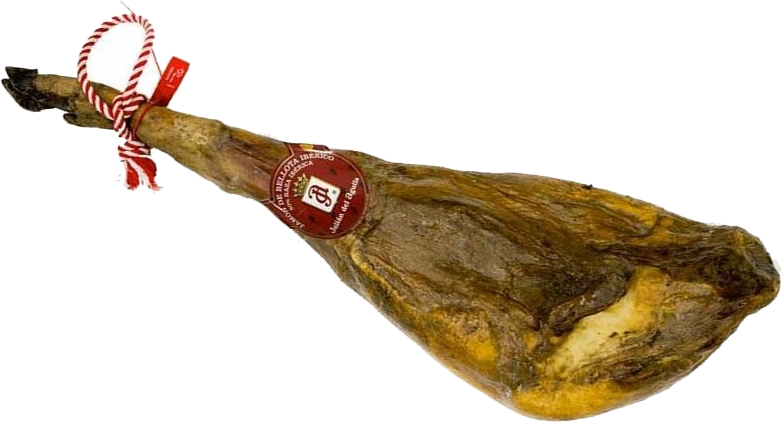
The spanish serrano ham is one of the typical mediterranean foods where is one of the most appreciated delicacies. It is obtained from drying and salting the rear pork legs. If the spanish serrano ham is obtained from the front legs is called "Paletilla". The front legs used to be more tasty because it have much more fat. Depending on the pork variety, its feeding or the serrano ham curing we can distinguish several types of serrano ham. The cured serrano ham is dividen into three denominations, depending of the curation time. - Curing from 9 to 12 months: Bodega serrano ham (Silver serrano ham) - Curing from 12 to 15 months: Reserva serrano ham (Gold serrano ham) - Curing more than 15 months: Gran reserva serrano ham (Gran serrano)
Iberian pork Depending on the pork feeding the iberian serrano ham can be classified into: - Iberian ham from acorn-fed pigs: The pork has been fed of acorn between months of november to march. - Iberian mix-fed cured ham: made from a pork that has been fed with acorn and also with fodder. - Ordinary spanish serrano ham: made from a pig that has been fed with fodder and other food like potatoes but never with acorn. The pork feeding type and the curing time are the determinants factors for the high quality of a iberian cured ham. The other important factor is the ham cutting. A good cutting technique will make a difference in a ham gourmet session. For this reason its necessary to know the techniques and tricks that professional cutters use and have an adequate tool: a professional iberian cured ham knife.
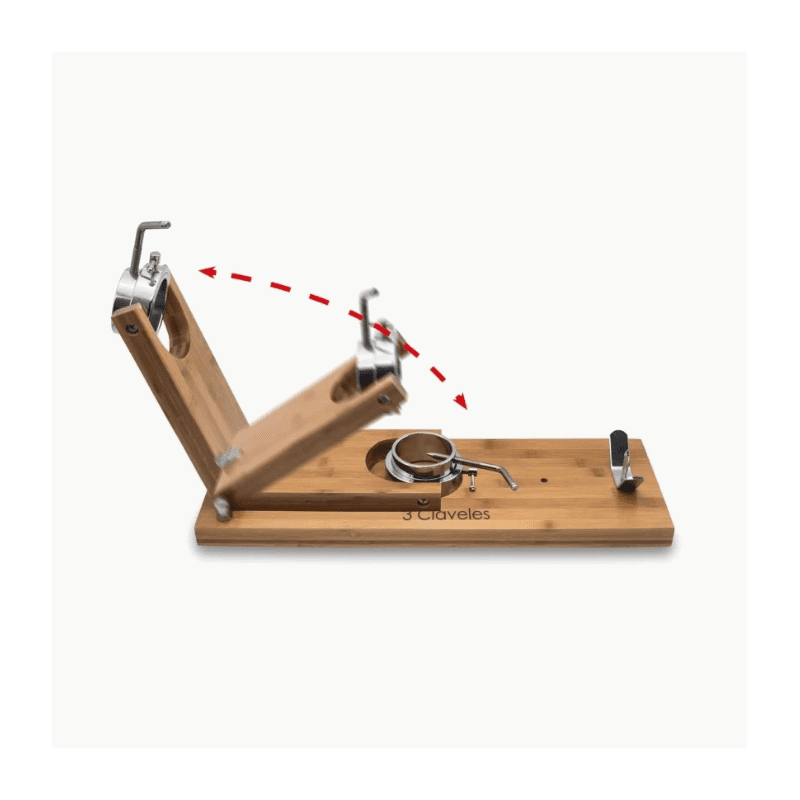
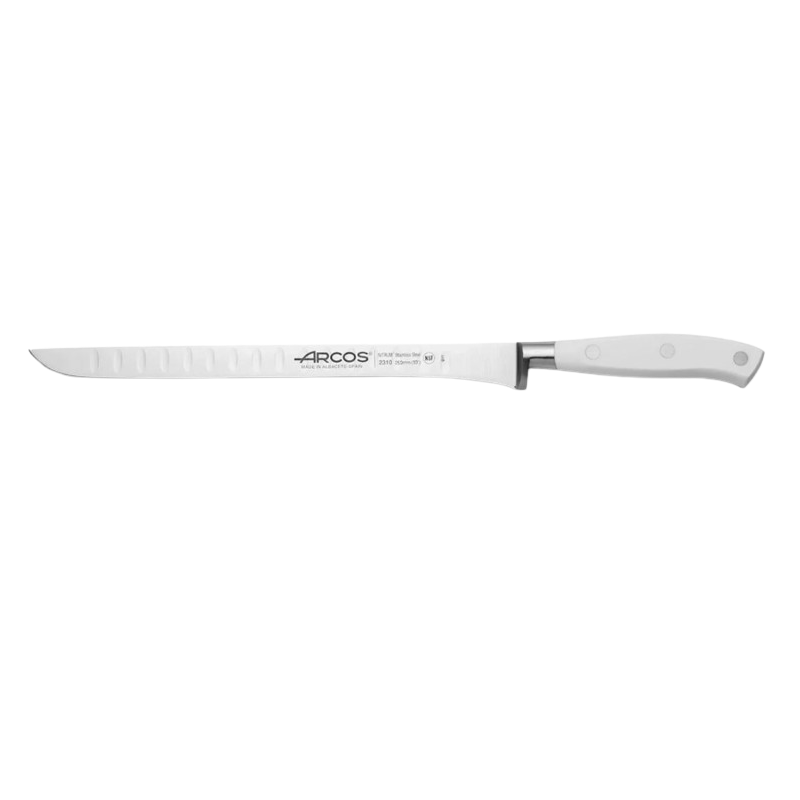
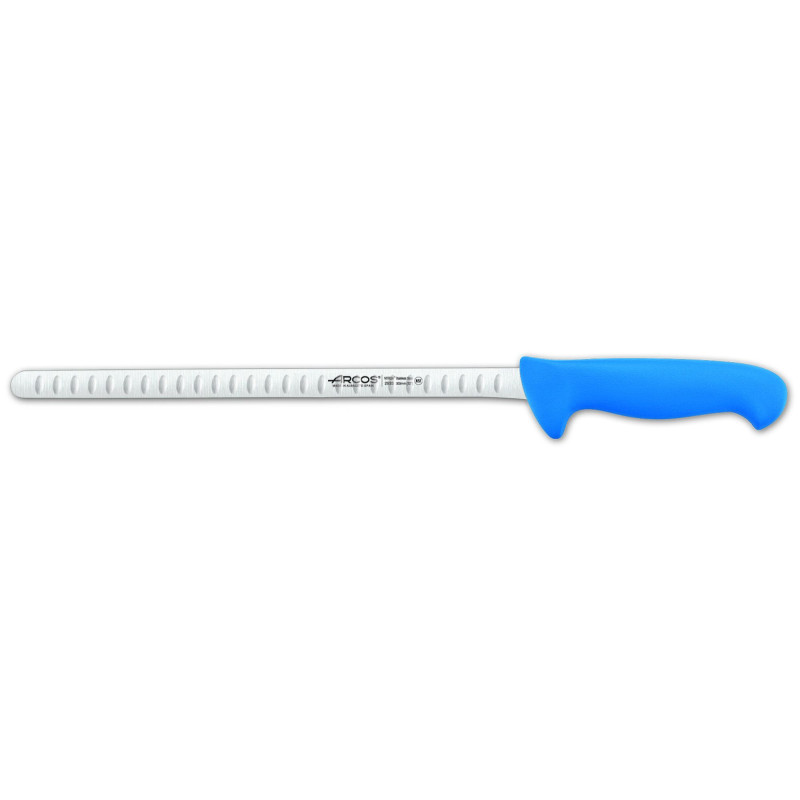
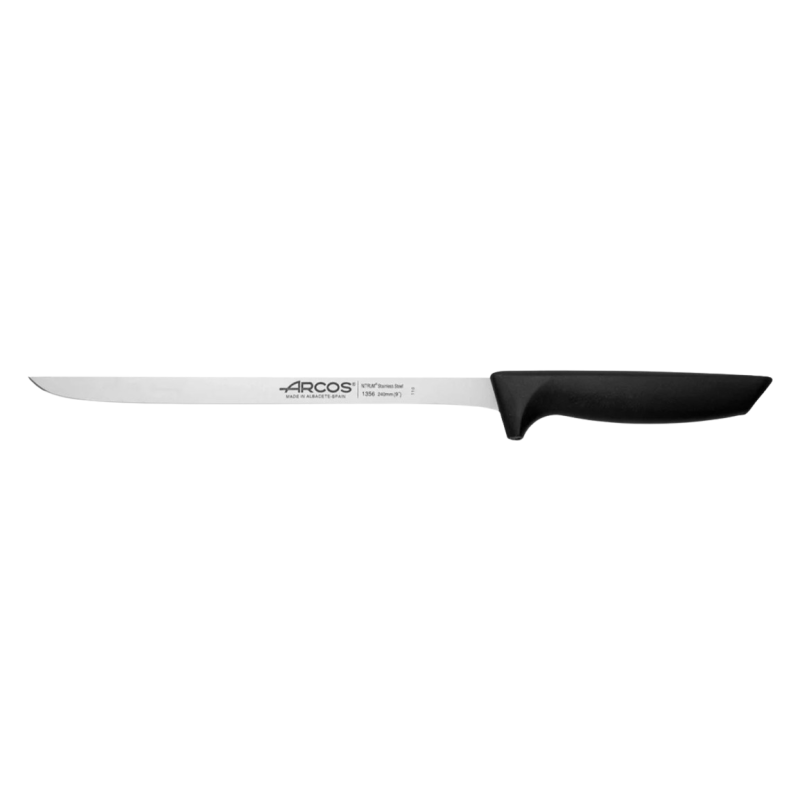
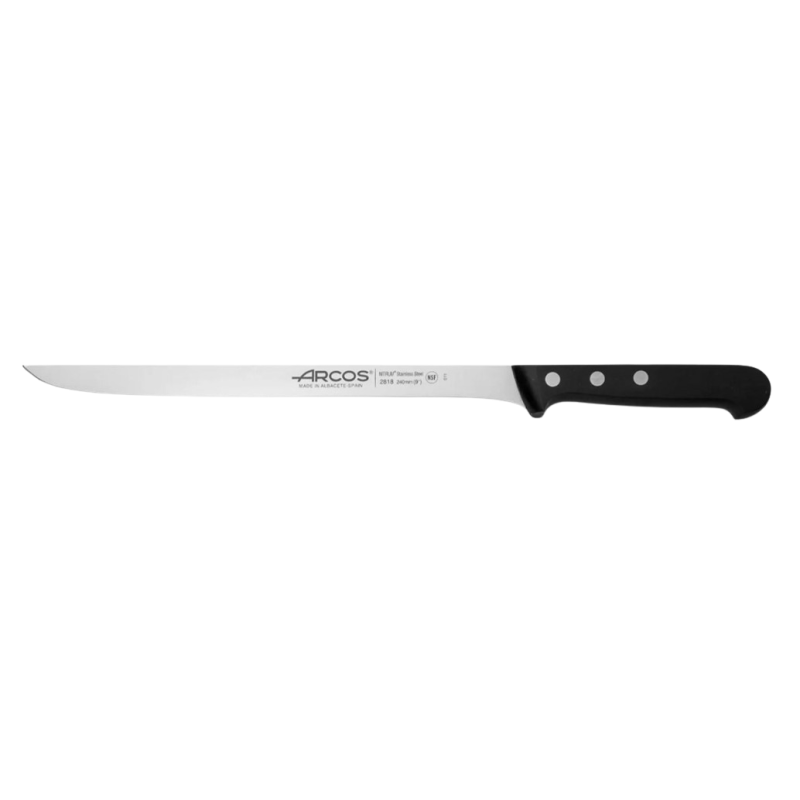
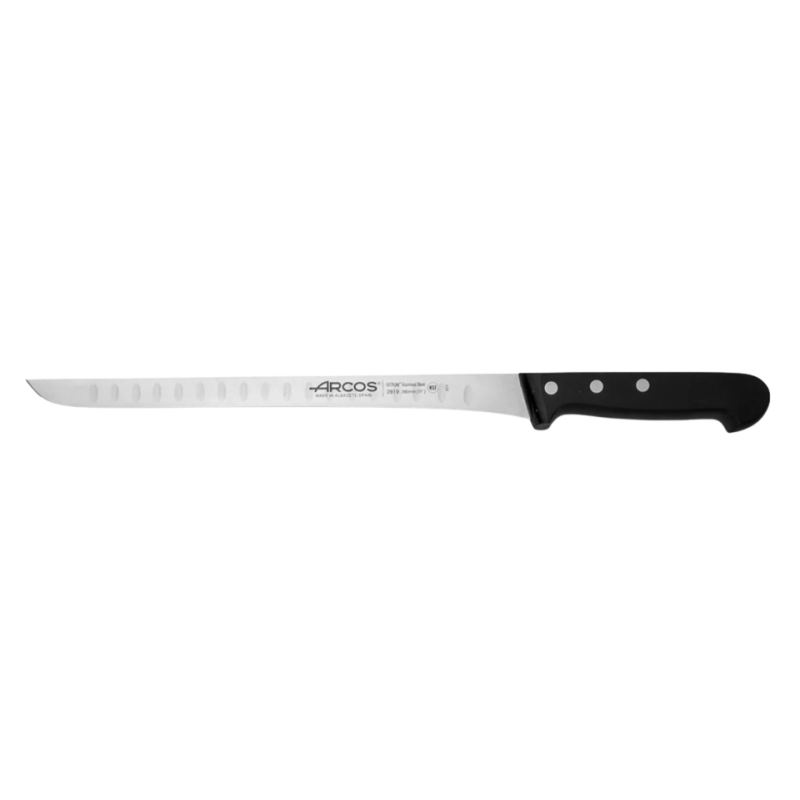
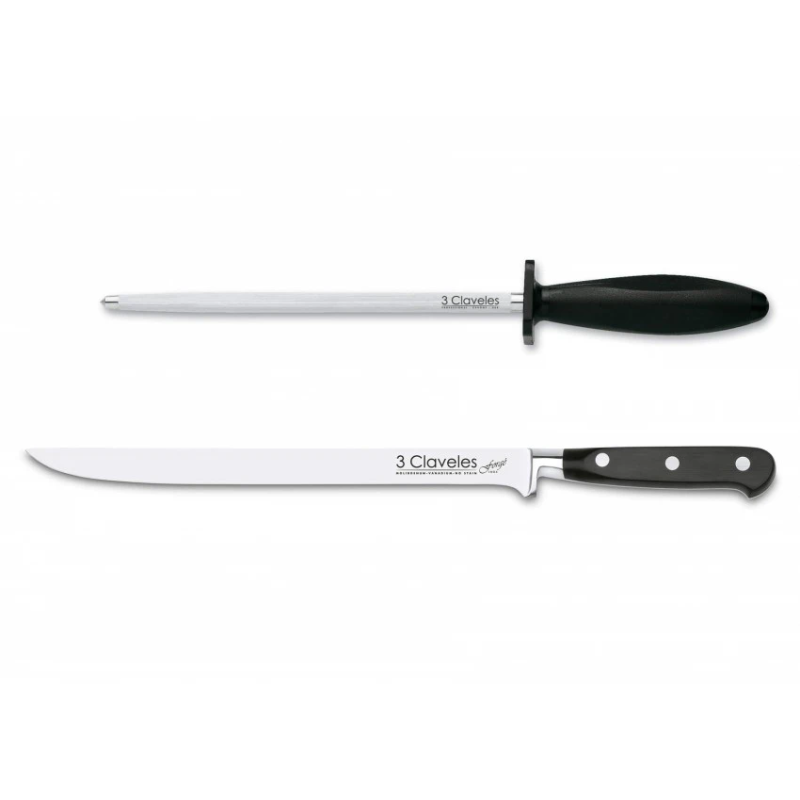
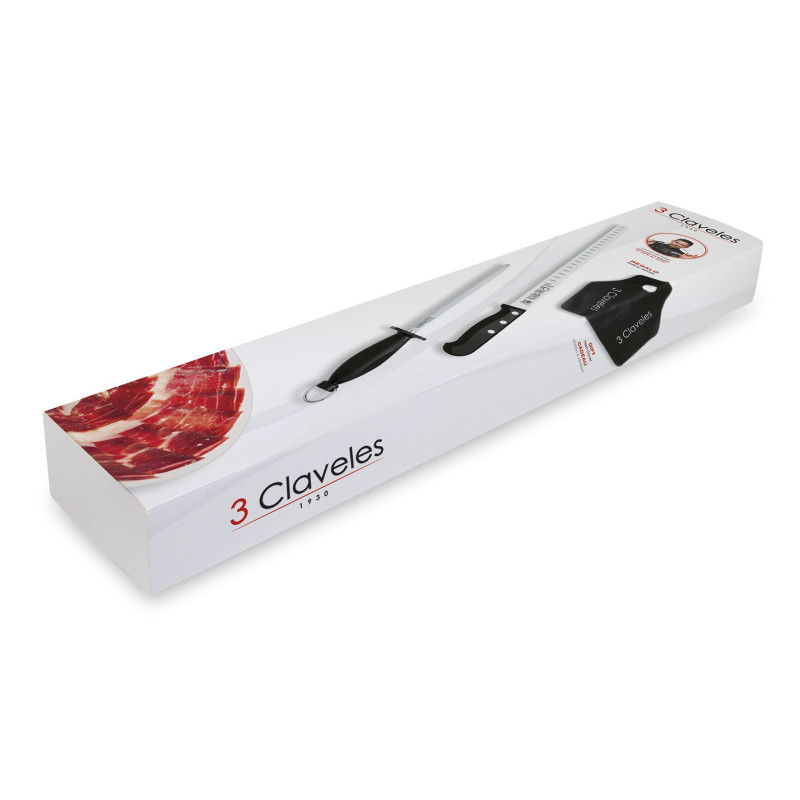
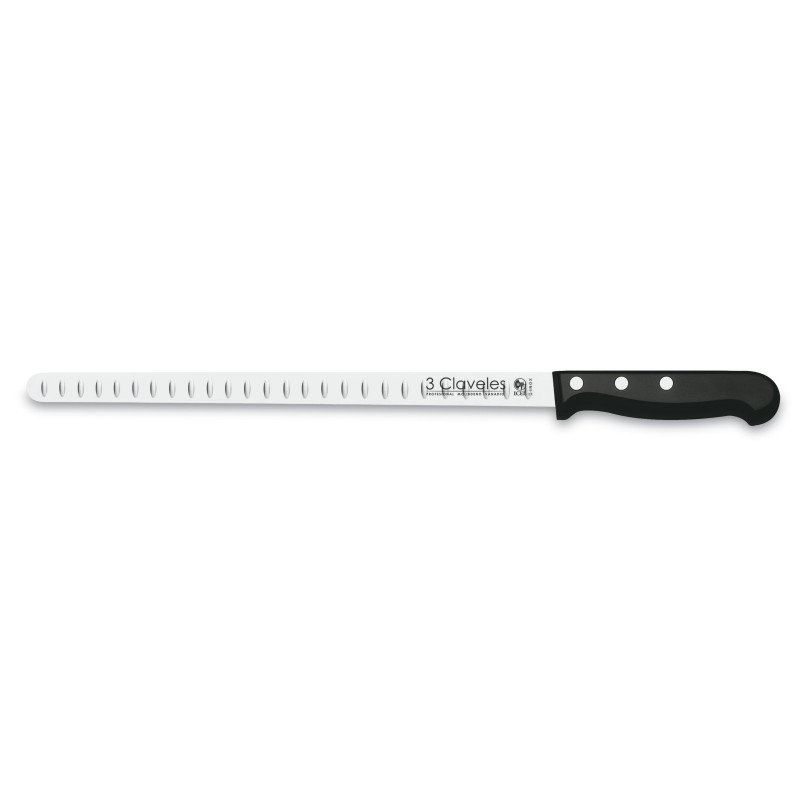
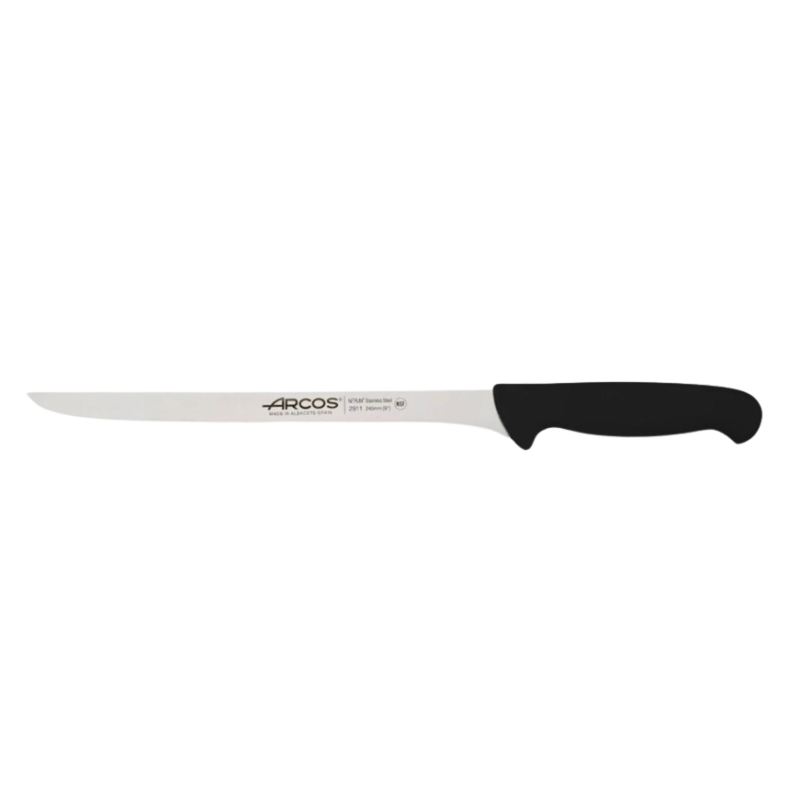
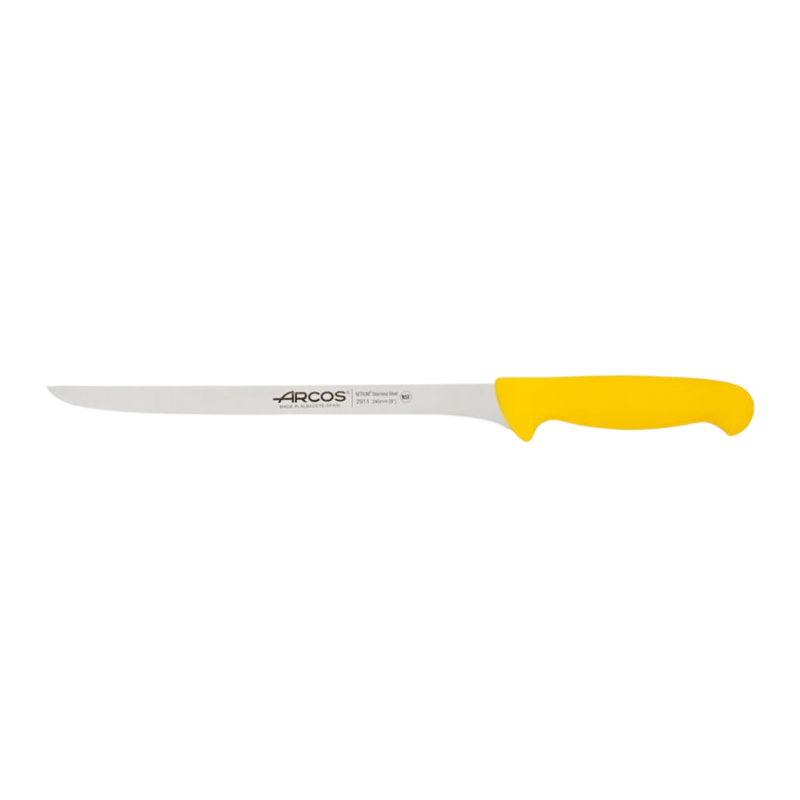
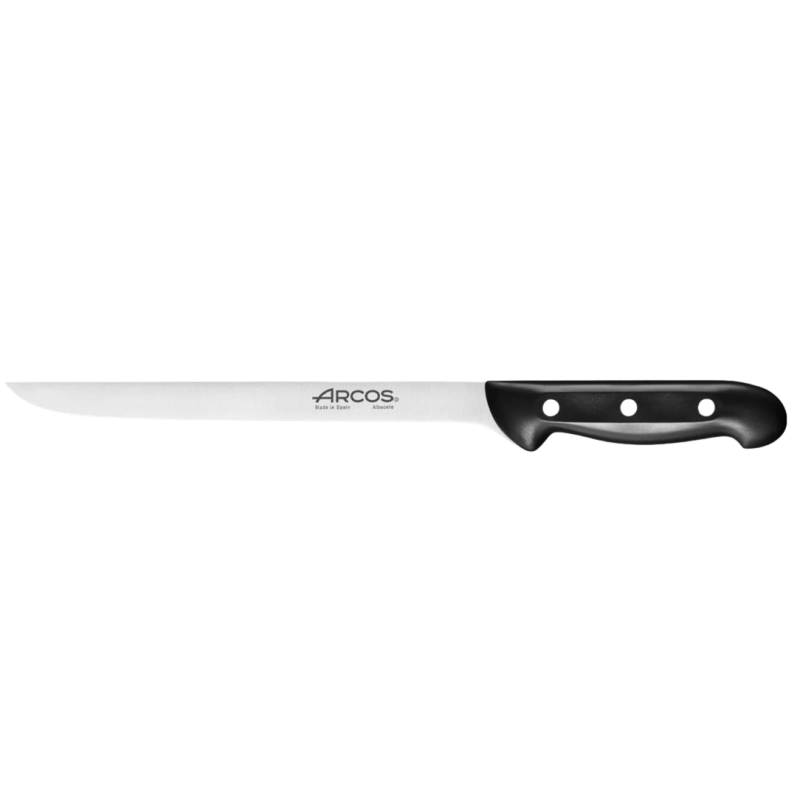
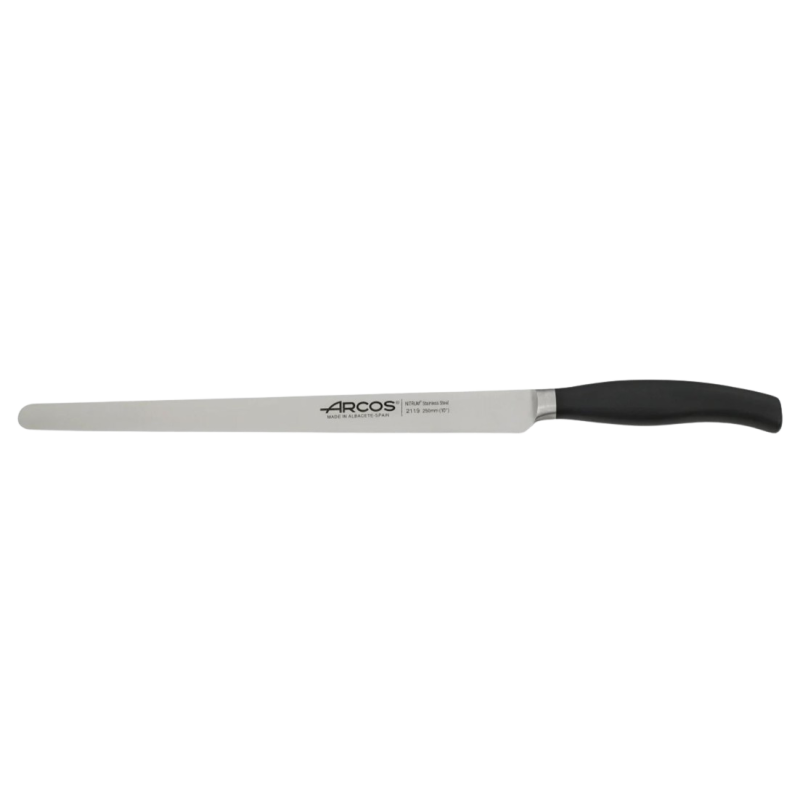
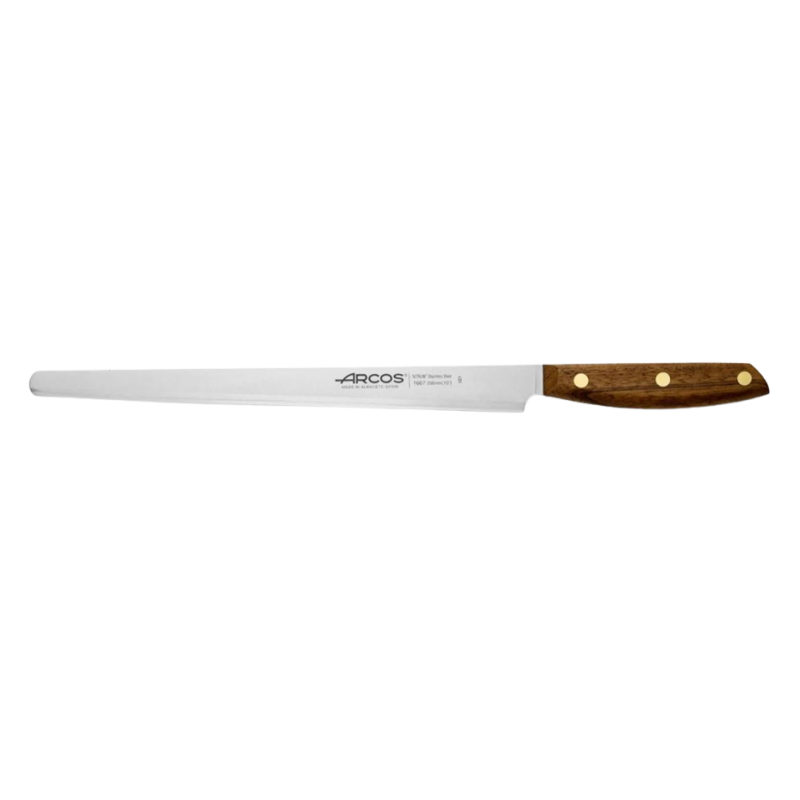
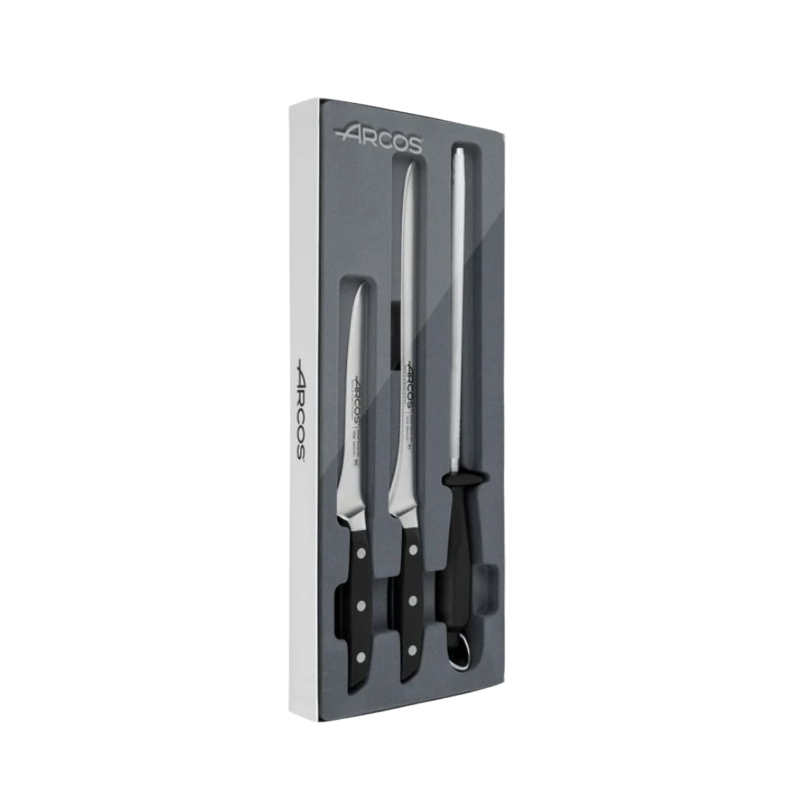
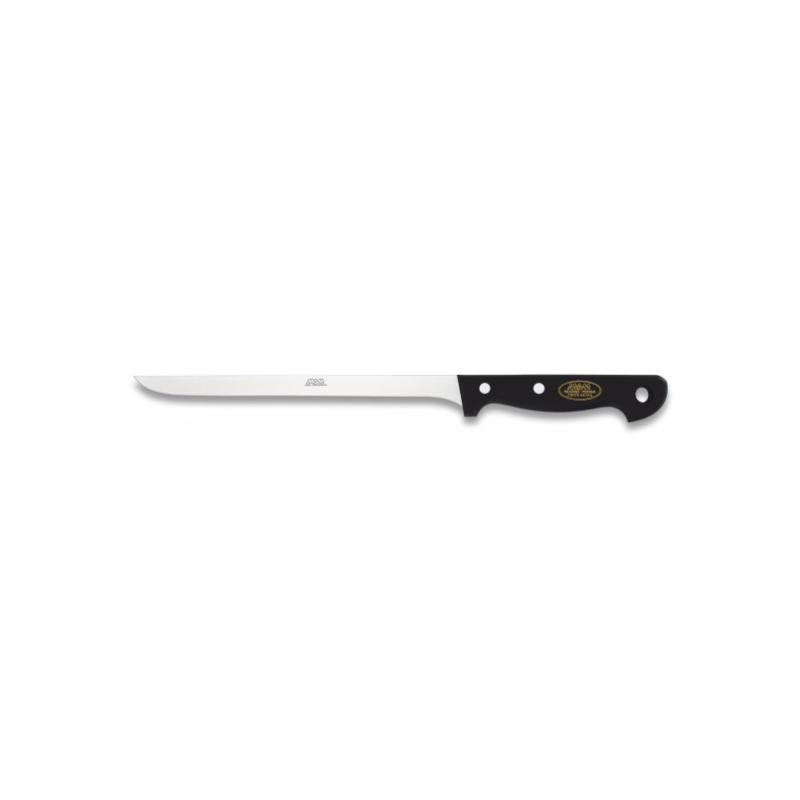
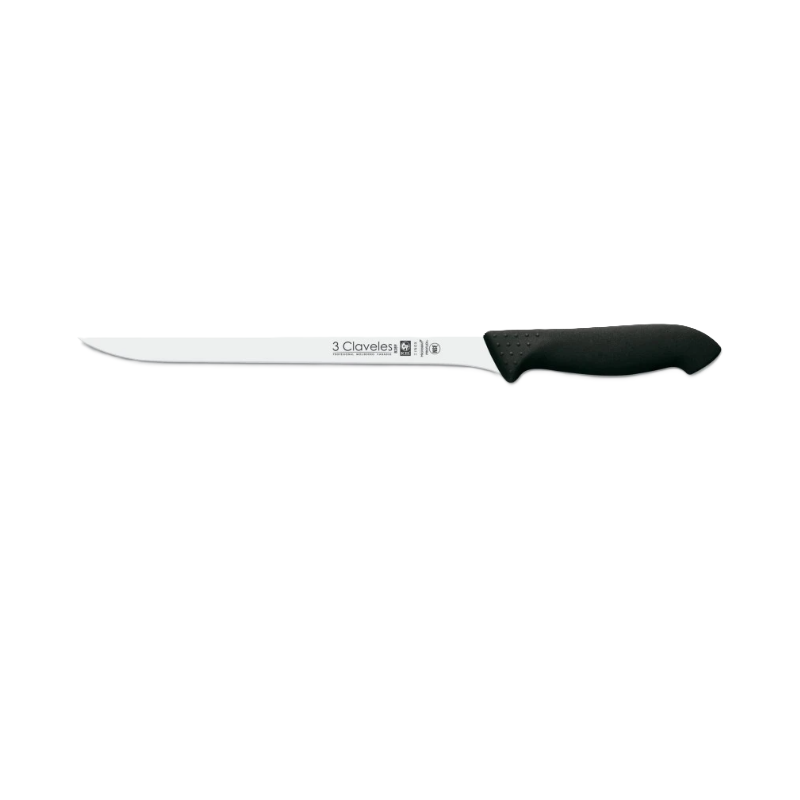
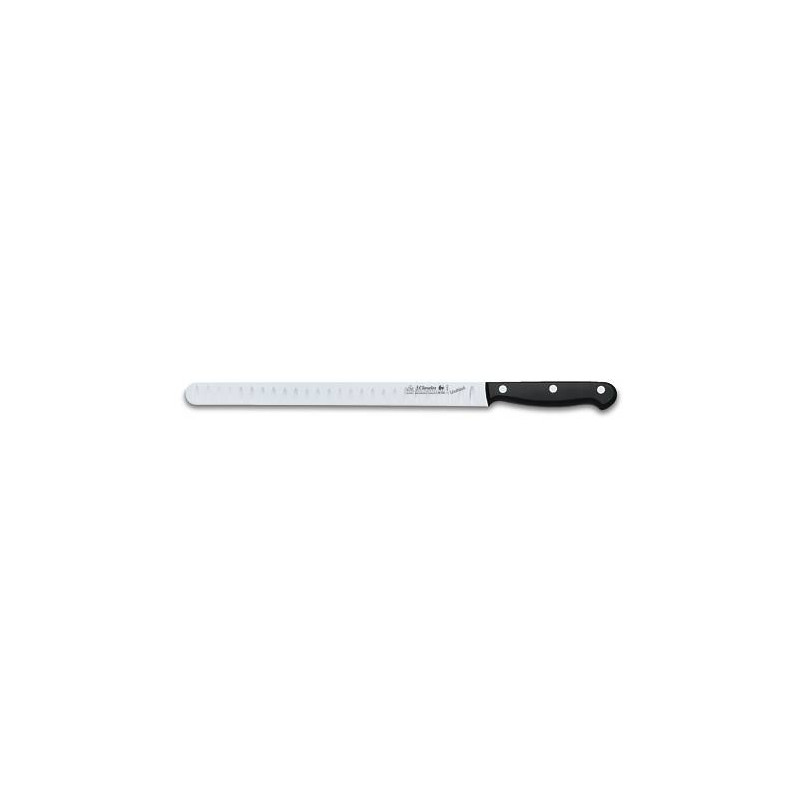
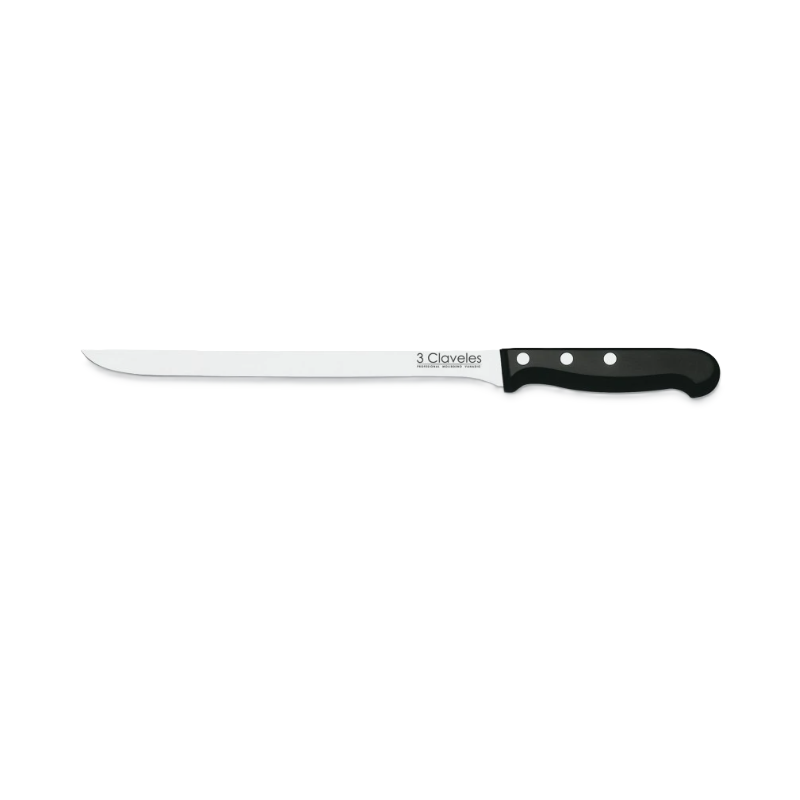
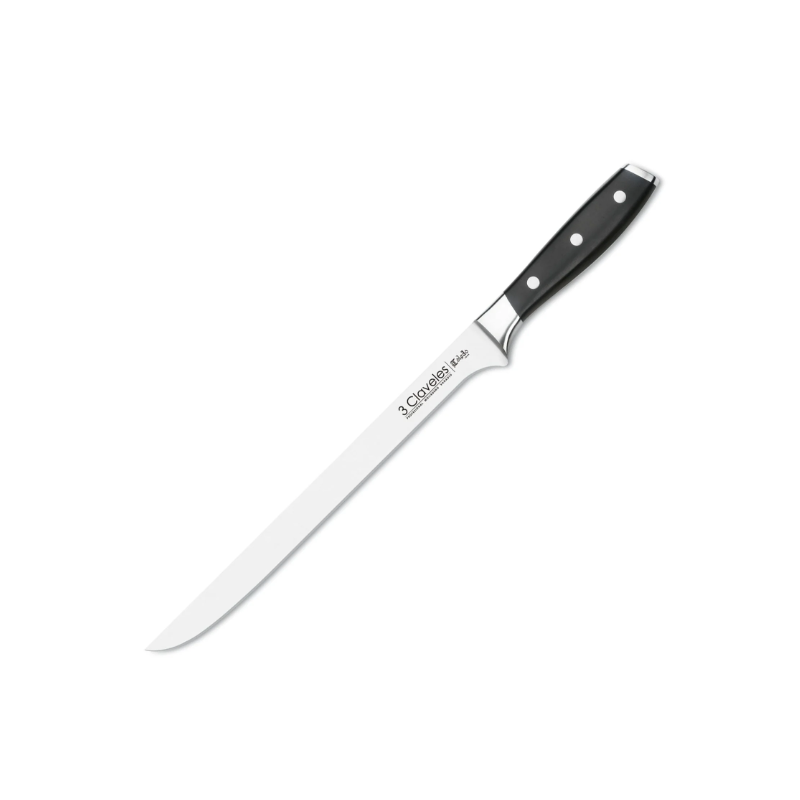
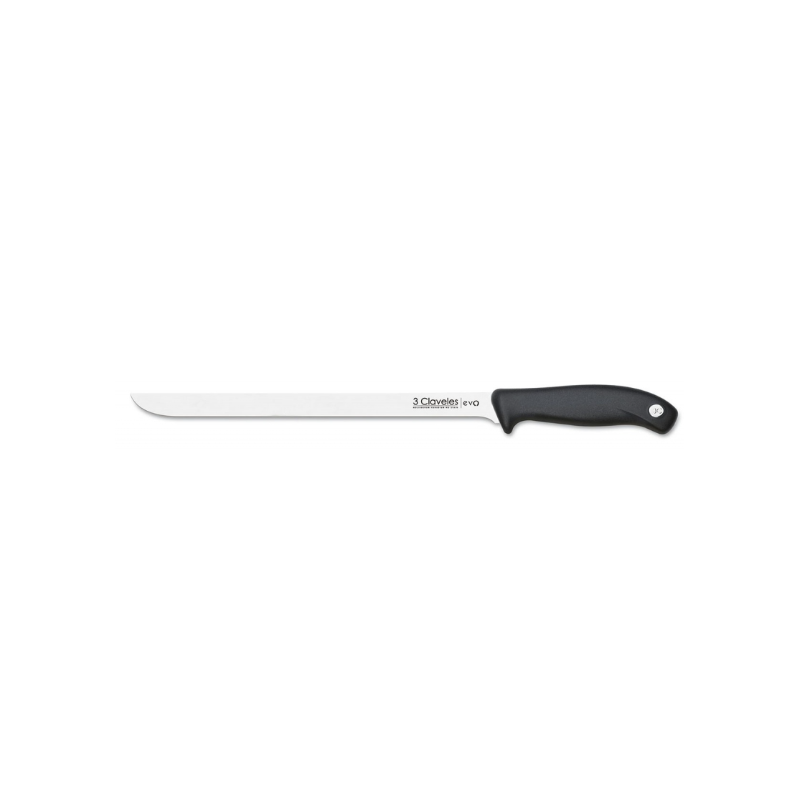
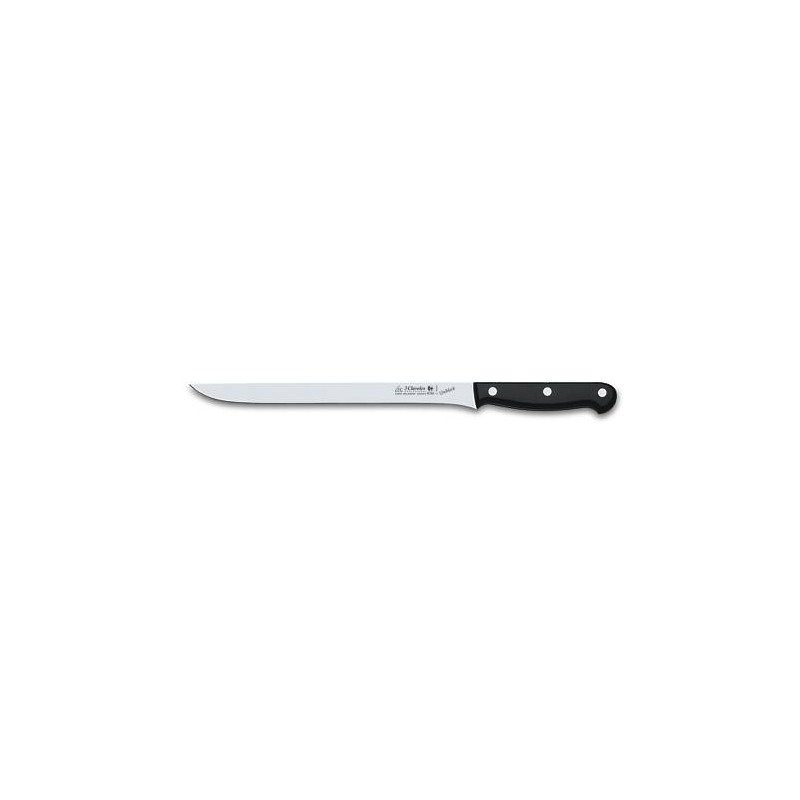
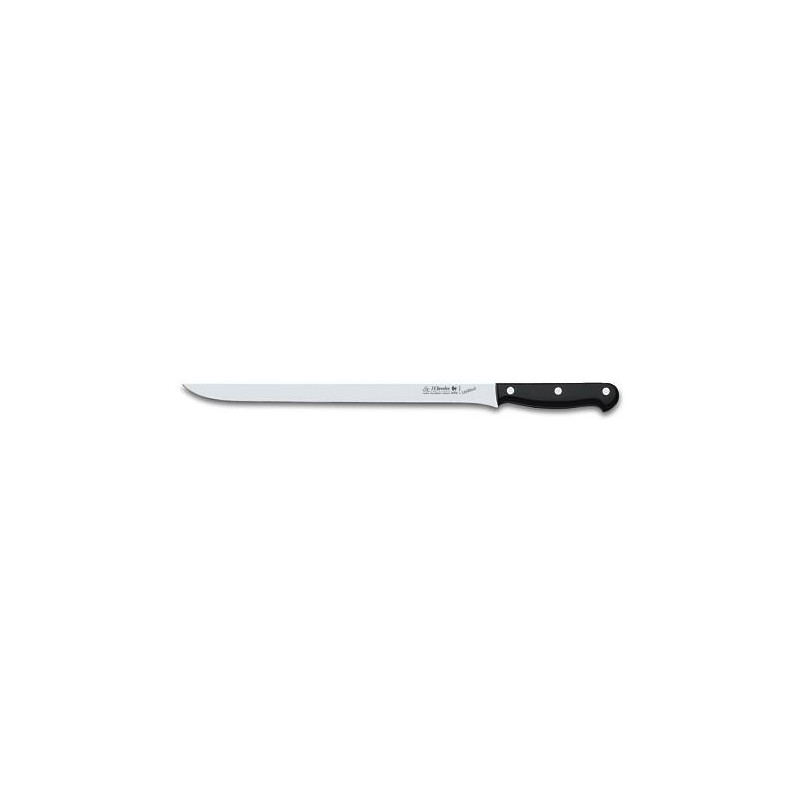
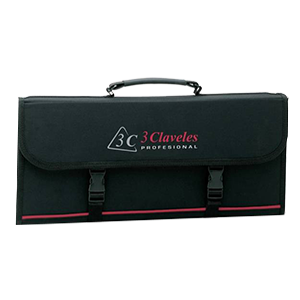
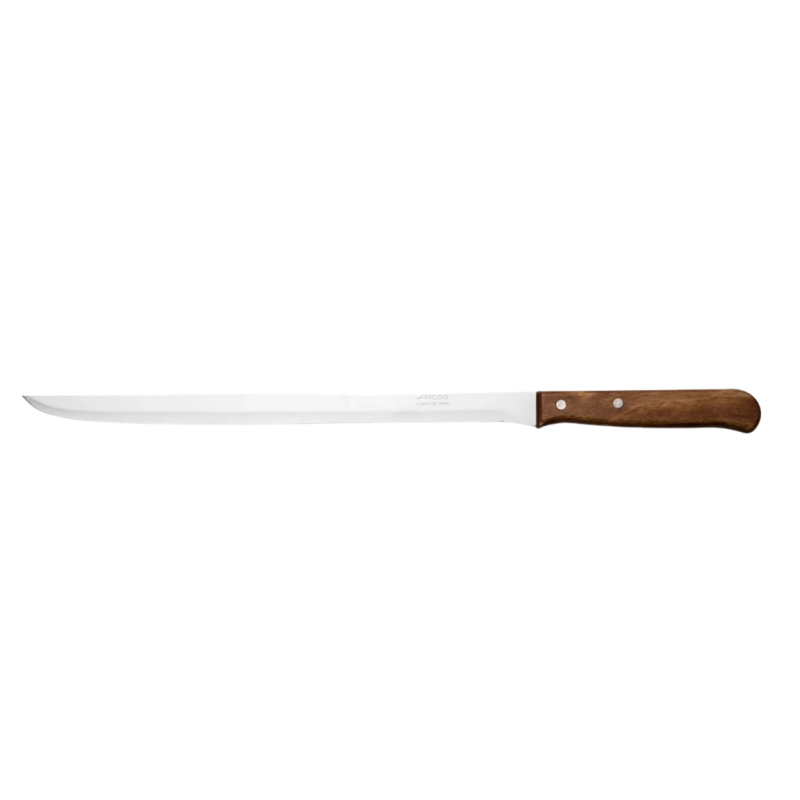
3 Claveles professional iberian ham knife To have a good iberian ham cutting experience we will need some tools: - To start cutting the ham we will need a "Jamonero" or ham holder. A device that holds dry cured ham so it can be cutted into fine strips. - A knife sharpener or grindknives because it is necessary that the ham knife is perfectly sharp. - A professional ham knife, long, narrow, flexible and well sharpened.
Professional magnet grindknives
- The "babilla" is found between femur and coxal bones. It's an area with less meet than the mace. - The "contramaza" is in the opposite side than the mace. It's the narrowest ham part so it is usually the most cured and the part that less fat has. - The "punta" tip part, is one of the fattest parts of the serrano ham so it's one of the tastiest parts. The "jarrete" and the "caña" were found between the shinbone and the fibula, it is a hard meet and usually is used to make iberian ham cubes.
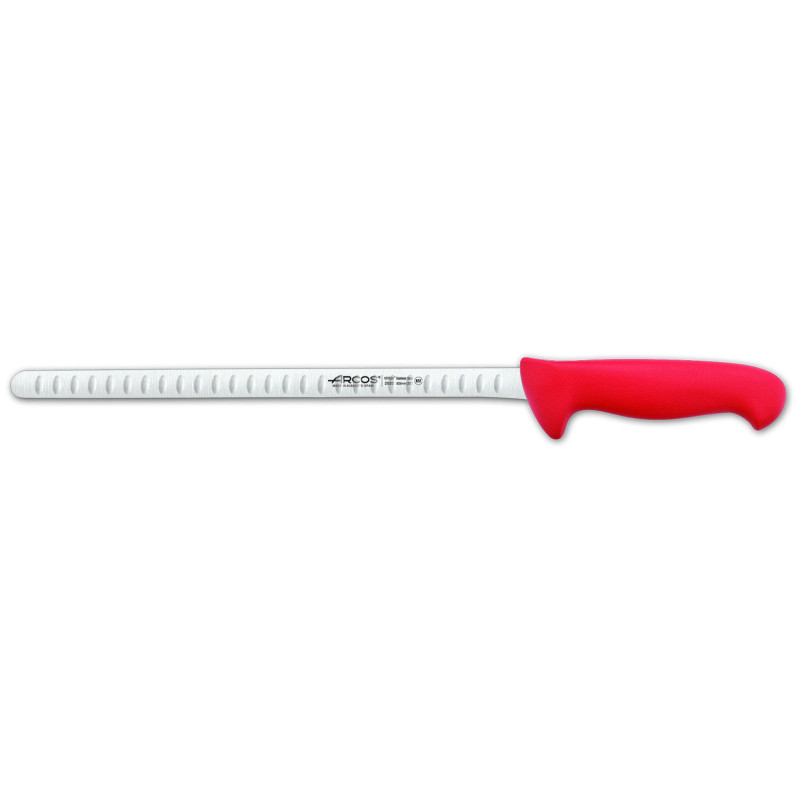
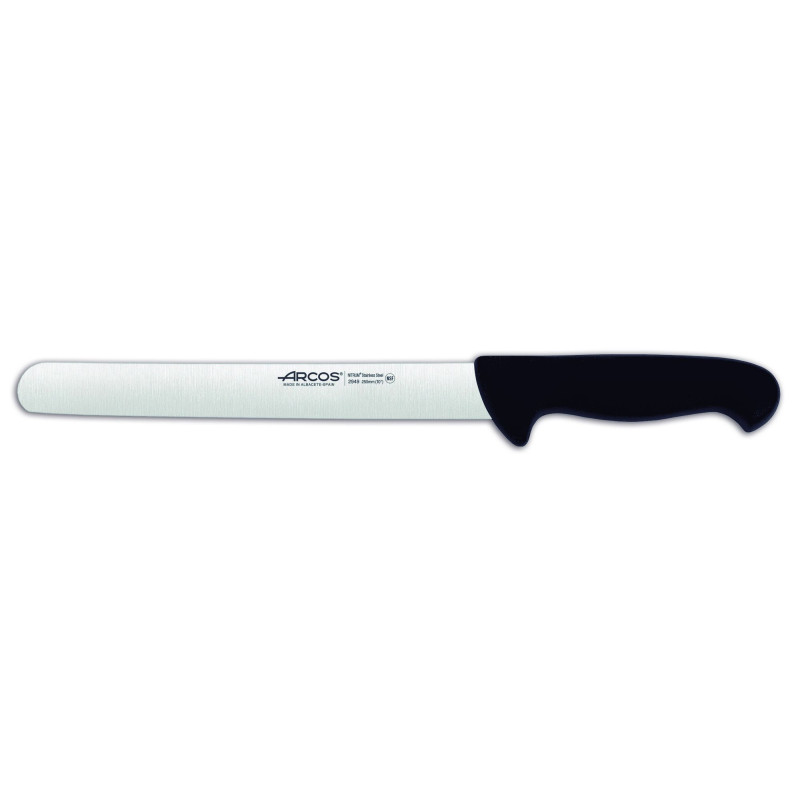
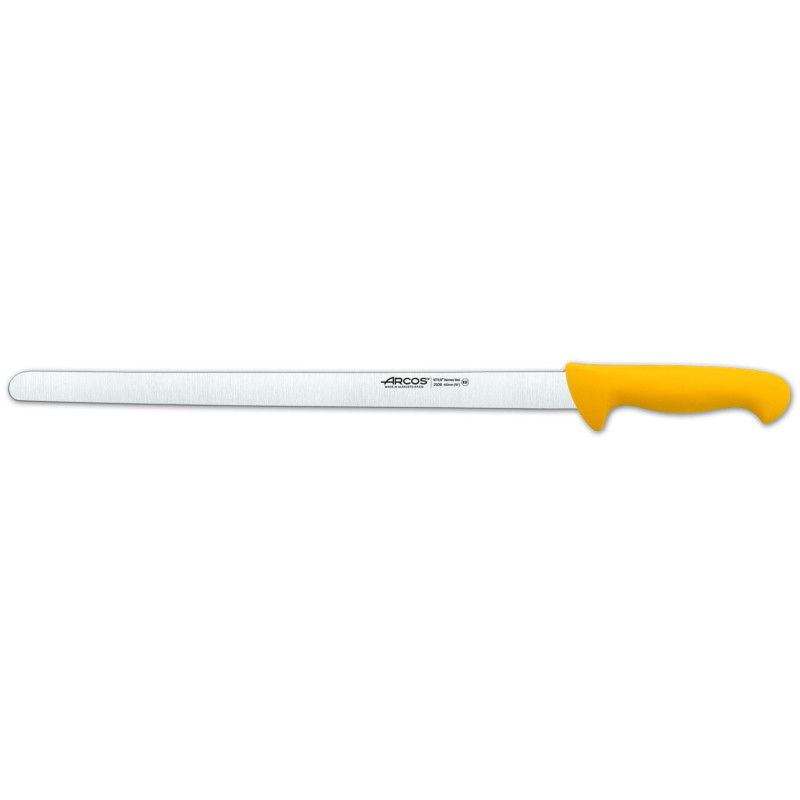
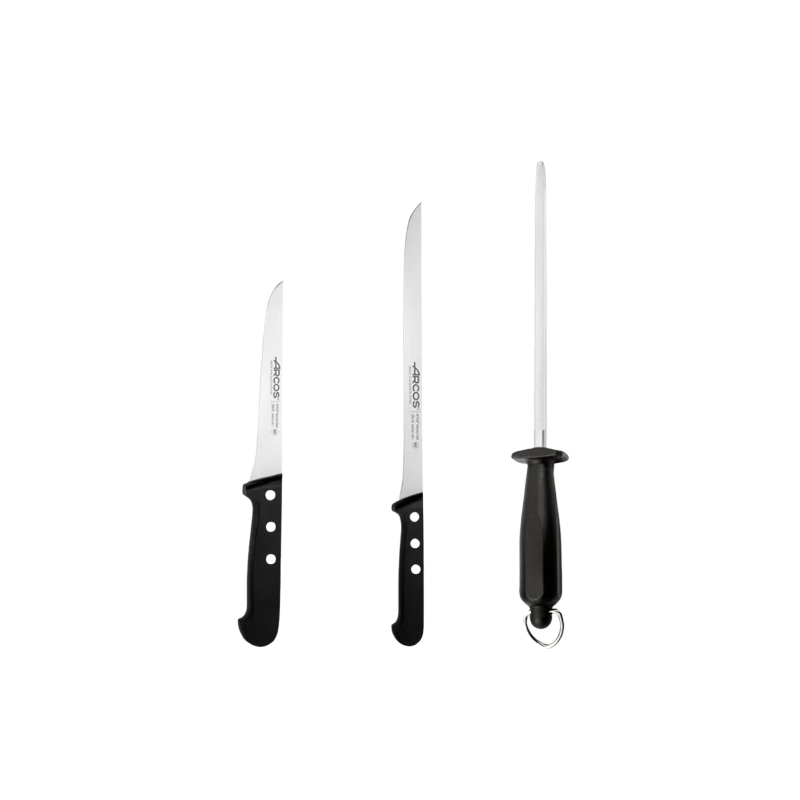
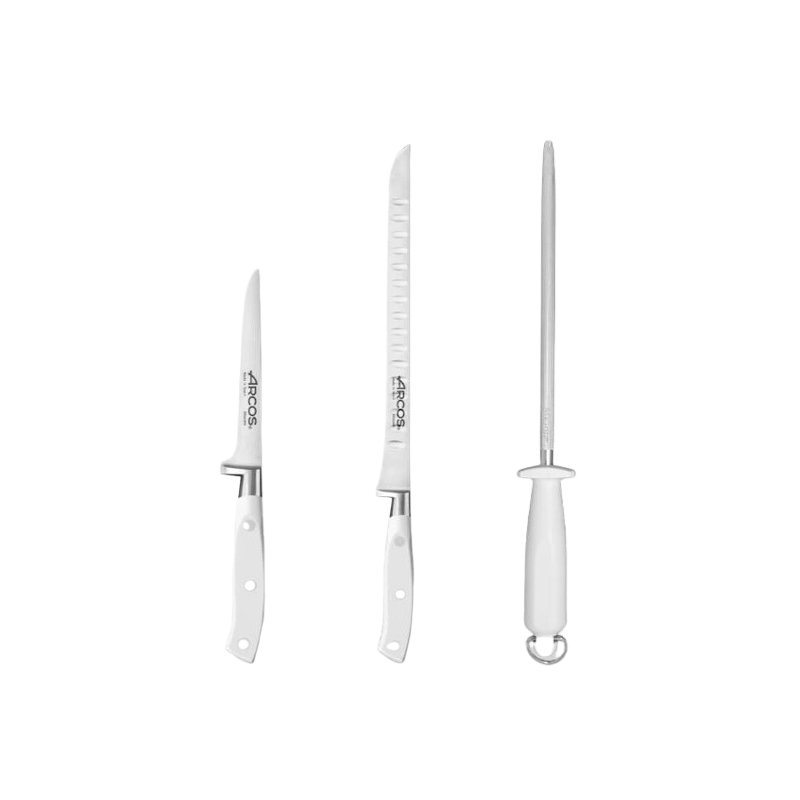
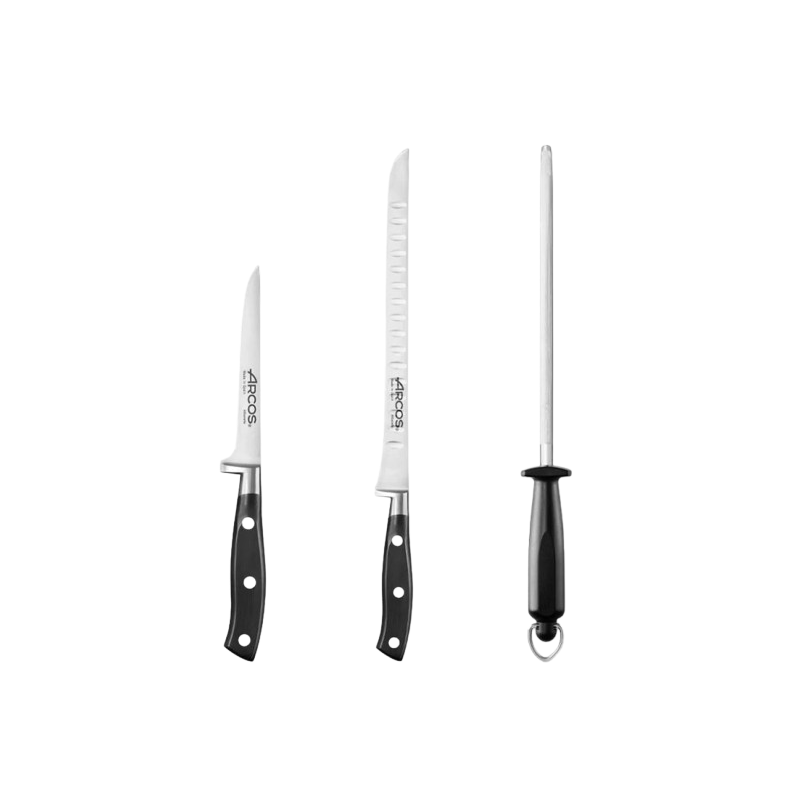
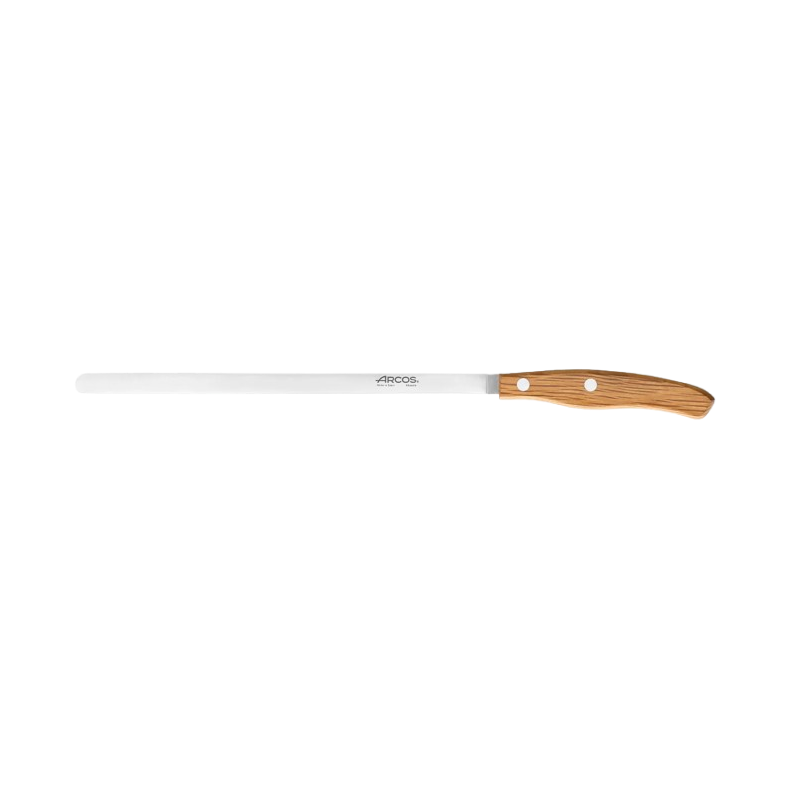
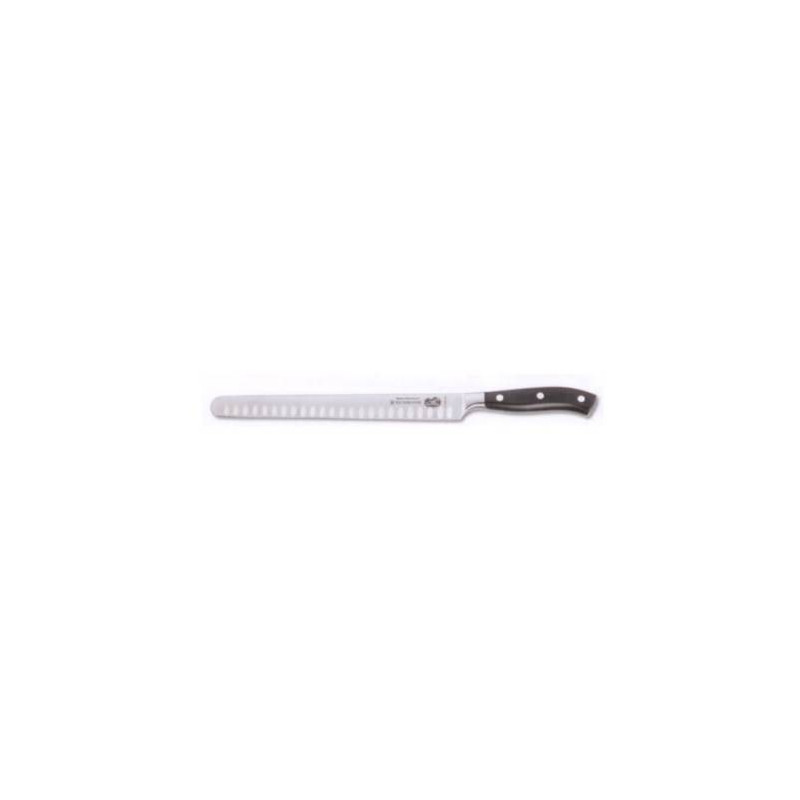
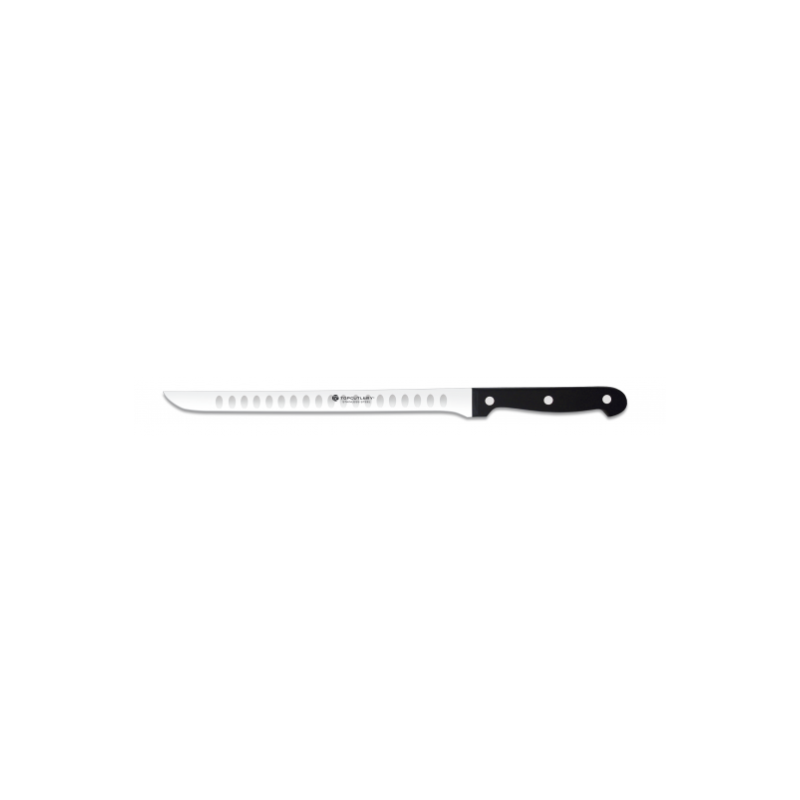
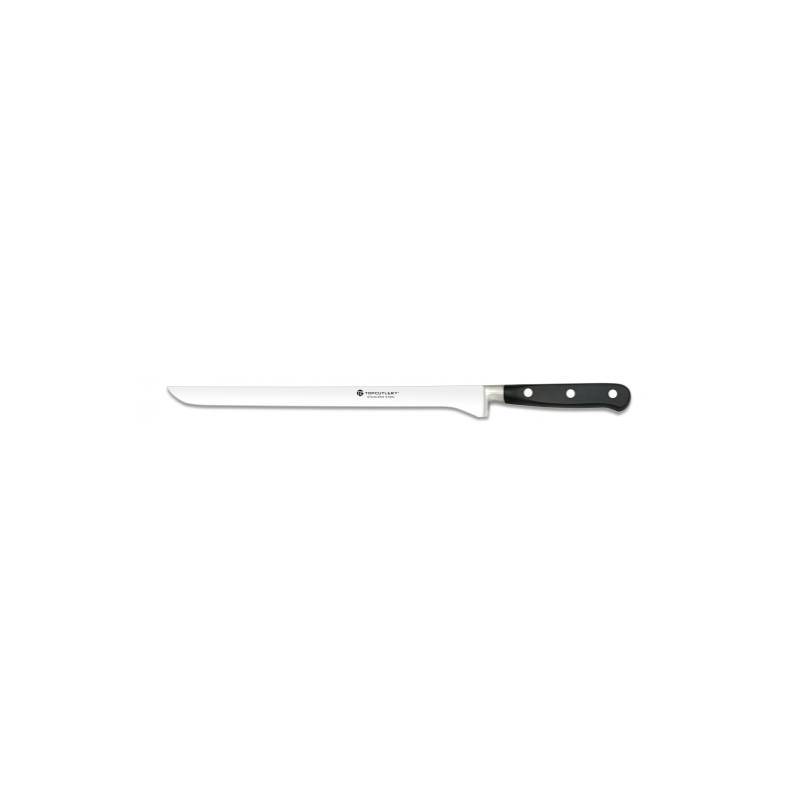
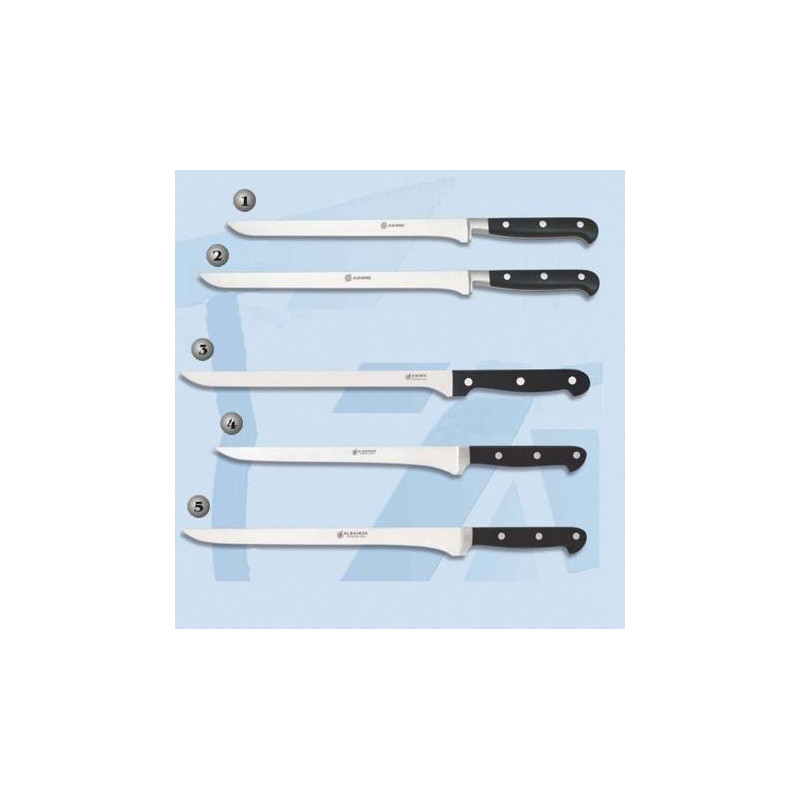
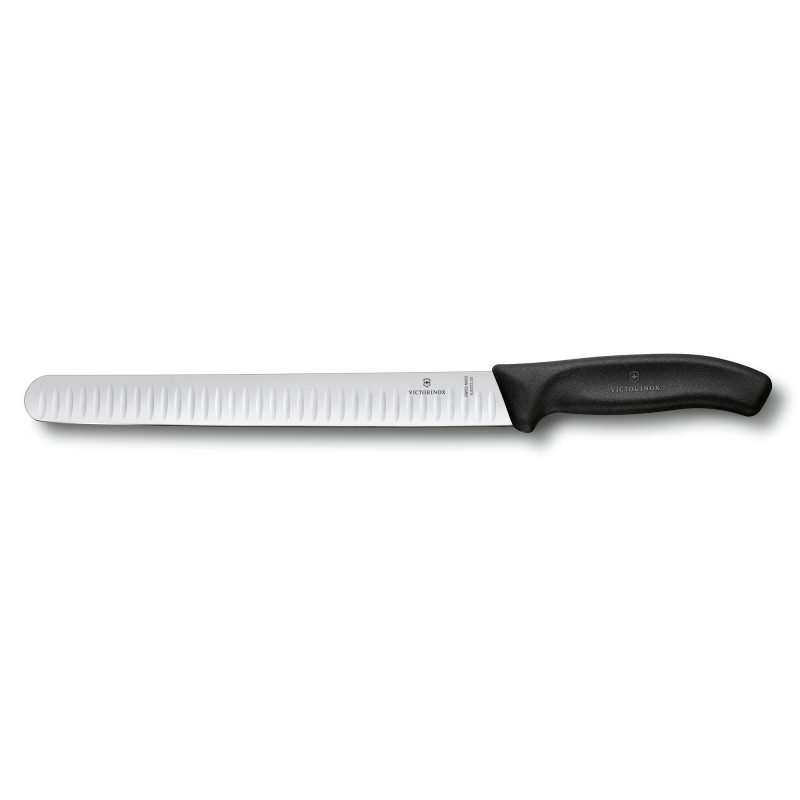
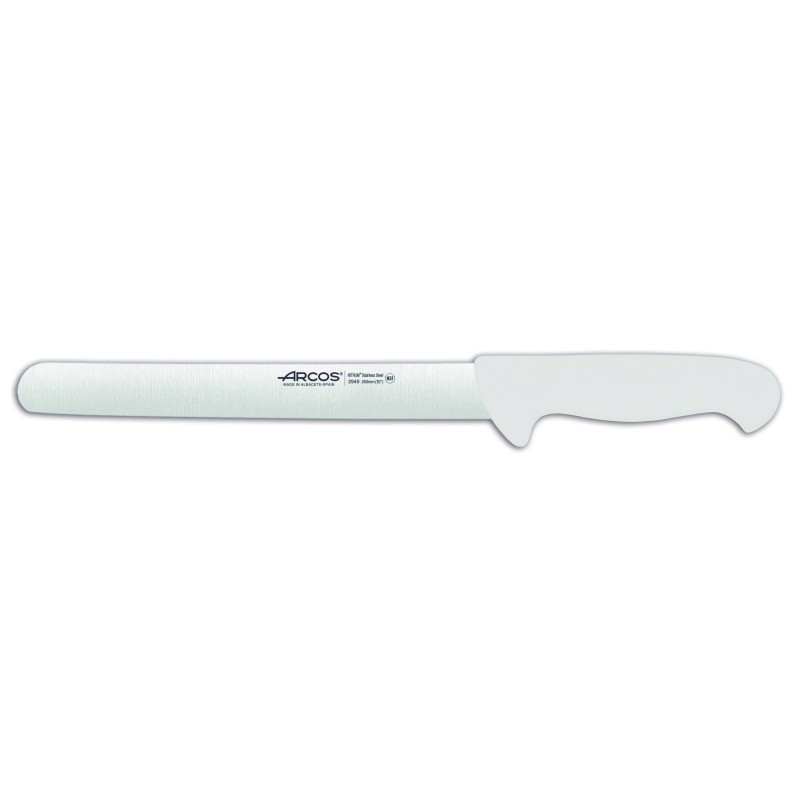
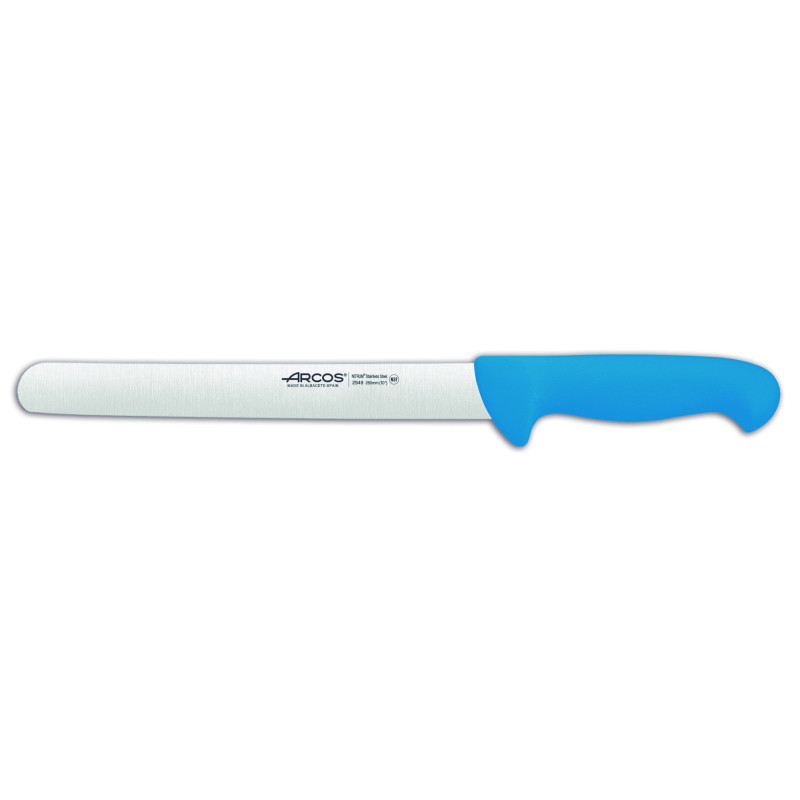
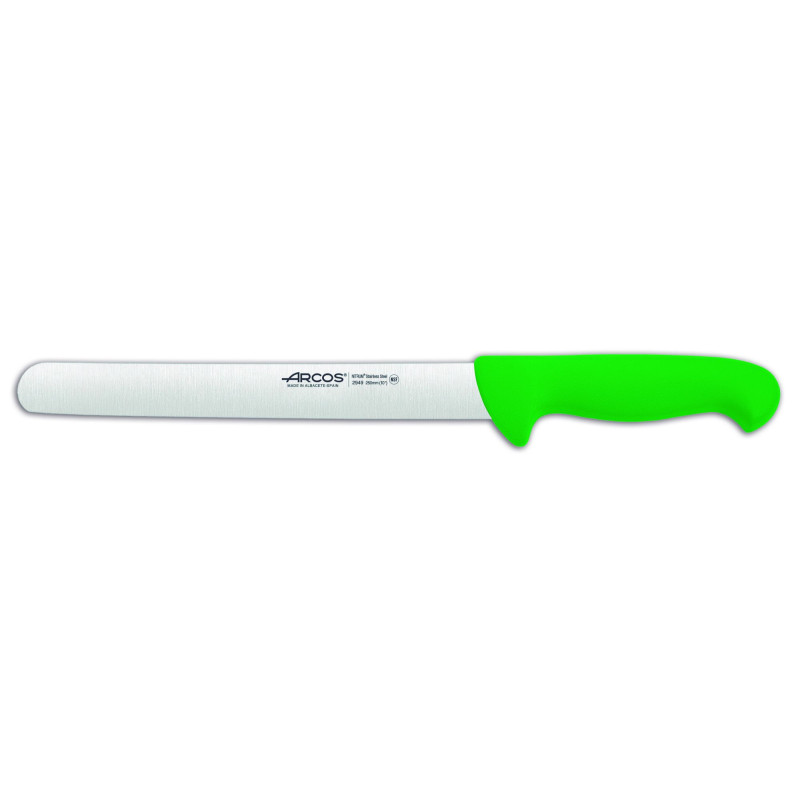
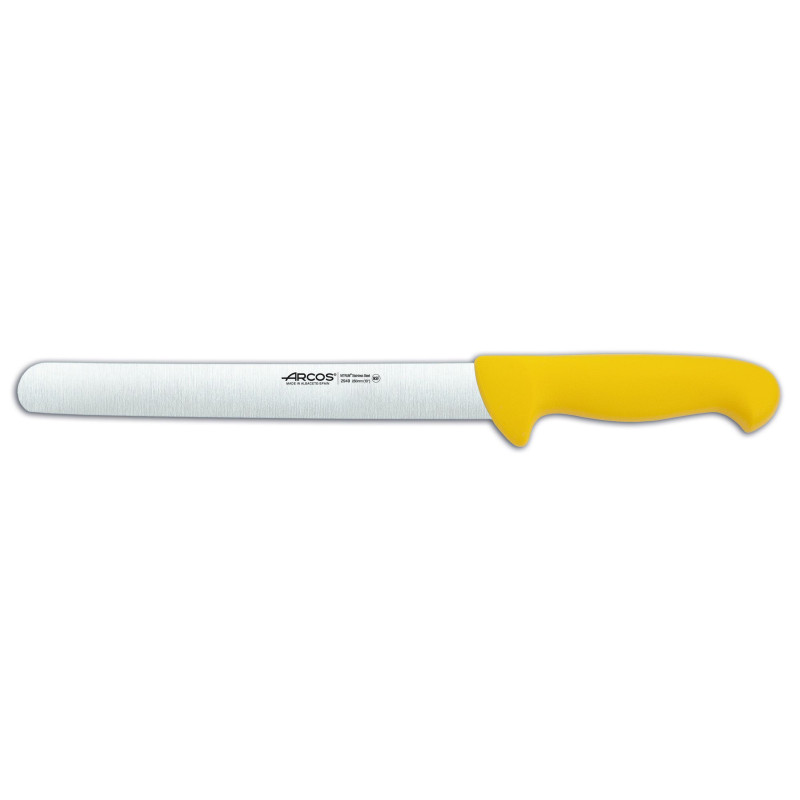
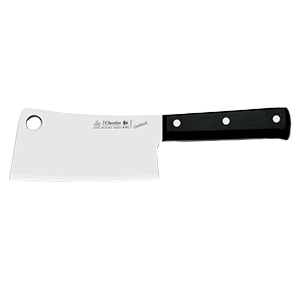
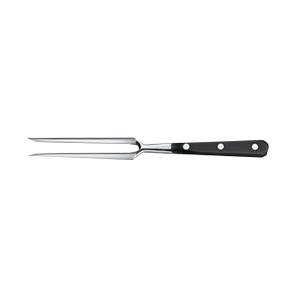
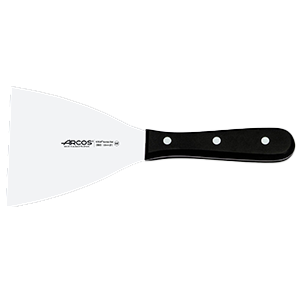
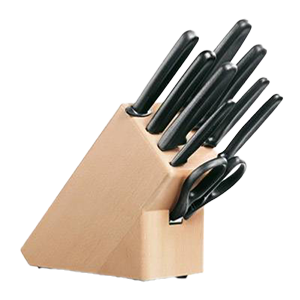
Utensils to cut spanish serrano ham: The ham knife A good serrano ham knife must be long, narrow and flexible, but especially, it has to be perfectly sharpened. The most used matherial to ham knives manufacturing is the stainless steel. This steel has the advantage that is very flexible but also has the disadvantage of loosing the sharpen so fast. For this reason is recommended to sharpen the ham knife very good before start to cutting the ham. To cut the serrano ham we must use, apart from the ham knife, two other knives. It is not required but is recommended because each knife has a specific characteristics and each one must be used to what has been designed. Hence, we will need a wide knife, that we will use to clean the ham and cut the cortex and other knife shorter to clean in depth and near the bones so it has to be a tip knife.
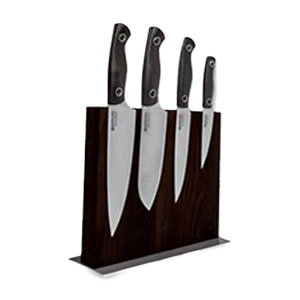
Professional kitchen knives
Besides the three knives w The grindknives is not a sharpen element properly said, its function is to settle the sharpen and maintenance it in good conditions so you will only have to sharpen it (with a sharpener) only once in two years. Once we know all serrano ham parts and count with a well sharpened iberian ham knife it's time to starting to cut the ham. The first thing we should do is to hold the ham in the "jamonero" or ham holder and hold it firmly to dont move. We should put the hoof looking up, leaving the mace in view because we will start to cut the ham in this part. The ham can be started by any of its sides, mace or "babilla" depending the consumer. If you start by the mace the ham will dry less.
Jamonero (Ham holder) In second place you should make a vertical cut with the ham knife around the "caña" and the "jarrete", not so deep, to facilitate the ham cutting. The third step is to clean the cortex and the outside iberian ham fat, we must consider that if we clean the cortex, the ham will dry earlier so we only will clean the part we are going to eat. We should save a piece of cortex to cover the discovered ham part and avoid it to dry so fast. If we
have made all the steps we should have the ham holded in the "jamonero" and
prepared to start cutting.
Ham cutting technique Before starting to cut the iberian ham we must think that we have in our hands a very sharpened knife so we have to follow some recomendtations before starting to cut the ham. The ham must be firmly holded in the "jamonero" avoiding it to move. We should hold the ham with one hand while cut with the other so its very important that the hand that holds the ham be allways upper than the hand that holds the knife. The cuts must be done allways in opposite direction to where we have the other hand.
We should keep a safe distance of the cut area and dont bow over the ham knife. To cut the iberian ham it's not necessary make a big strength, we should cut slowly making broad knife movements. Once commented the basic security measures to cut ham we will start explaining the ham cutting technique.
Serrano ham cutting technique When we arrive to the bone we should cut the ham in cubes instead of slices. Once finished the mace area we should turn the ham placing the hoof looking down to cut the "babilla" or the "contramaza" area with the same technique. Ham bones can we exploited to make high quality broths or cooked, for this we can cut the bones or even freeze it. Cutting a "paletilla" (front leg ham) is so similar to cut a iberian ham although we will need a smaller tip knife to cut the ham near the spatula bone, that have a very appreciated taste. Once we have finished cutting the serrano ham we should cover the areas that are in contact with air with the cortex and the fat we have saved before. Everything should be covered with a dishcloth. Thus the ham will be conserved perfectly and the exposed areas will not dry.
Serrano ham conservation
Iberian ham plate presentation
Author: www.aceros-de-hispania.com |
|
Inform about this web to your friend |
||
|
|
||
[Knives] [Pocket knives] [Daggers] [Axes] [Swords] [Sabers]
[Medieval armours] [Airguns] [Various]
[Spyderco] [Leatherman] [Victorinox] [Fällkniven] [Böker] [Magnum] [Wenger]